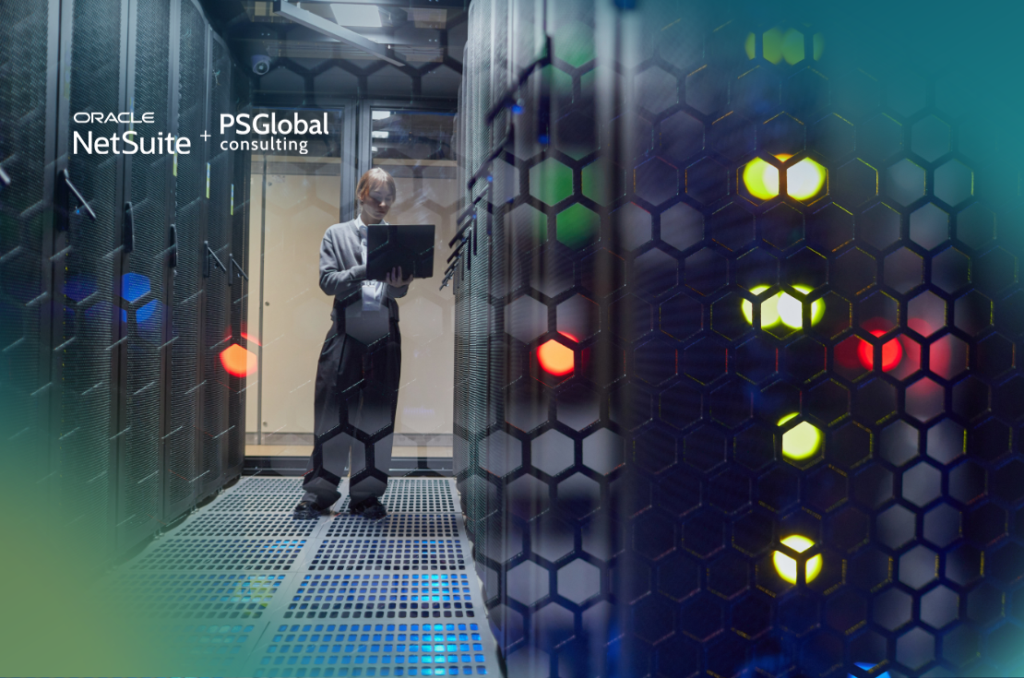
A data centre business in Singapore that runs finance and operations on NetSuite uses a single cloud ERP for billing, asset management, procurement, and reporting, which helps it maintain uptime, bill customers accurately, and stay compliant as it scales. That mix of operational control and financial visibility is what makes NetSuite a leading ERP for the data centre sector in the region, and it is why many operators choose a specialist NetSuite partner such as PS Global to implement it.
The stakes are high because a data centre runs on thin margins against high fixed costs, which puts scalability, security and compliance, and cost control at the centre of profitability. Singapore adds its own pressures on power, land, and data protection, and the enterprise systems that run these facilities must keep pace with rapidly growing compute demand.
Market Context: Data Centre Landscape in Singapore
Singapore already hosts more than 70 data centres representing around 1.4 gigawatts of computing capacity, and demand keeps climbing. The Singapore data centre market was valued at US$3.25 billion in 2025 and is expected to reach US$5.11 billion by 2031, growing at a compound annual rate of roughly 7.8%. Across the wider region, the Southeast Asia data centre market was valued at US$13.71 billion in 2024 and is projected to reach US$30.47 billion by 2030, and McKinsey has described the global build-out as a multi-trillion-dollar race to scale data centres. Wholesale colocation makes up most of Singapore’s revenue, reflecting an enterprise preference for shared, professionally managed capacity over private server rooms.
Key drivers
Several forces shape this digital infrastructure. Hyperscalers such as AWS, Microsoft, and Google Cloud keep expanding their footprint, drawing suppliers of switching fabric, battery storage, and low-latency edge nodes into their orbit. Edge computing pushes workloads closer to users and adds smaller distributed sites to manage. Sustainability targets sit at the forefront of every planning conversation, since Singapore aims to achieve net-zero emissions by 2050 under the Green Plan 2030. Connectivity remains a core advantage, with dense fibre routes and submarine cable access making the island a natural landing point for regional traffic across the global network.
Regulatory and compliance considerations
Two areas of regulation define the Singapore market. On data, the Personal Data Protection Act governs how organisations collect, use, and disclose personal data, and it was strengthened in 2020 with mandatory breach notification and heavier financial penalties administered by the Personal Data Protection Commission. Facilities and their tenants both have obligations under this regime, raising the bar for how systems secure data and support data governance. Meeting these rules is a regulatory compliance exercise shared by finance and operations teams.
On energy, the Green Data Centre Roadmap, launched by IMDA in May 2024, set a target for all facilities to achieve a Power Usage Effectiveness of 1.3 or lower at full IT load over the following decade. The same roadmap aims to unlock at least 300 megawatts of additional capacity in the near term, with further capacity available where green energy is deployed. Efficiency has become an entry requirement for growth, and power and cooling performance now shapes what a facility is allowed to build.
Operational challenges unique to Singapore
Land is scarce and power is finite, making Singapore a compact microcosm of the pressures facing the industry worldwide. After a moratorium on new builds that ran from 2019, the government relaxed the ban in 2022 and awarded around 80 megawatts to four operators through a pilot allocation exercise, with a second call since opening that has allocated at least 200 megawatts more. In October 2025, the government set aside land on Jurong Island for a low-carbon data centre park capable of accommodating up to 700 megawatts. Multi-tenant facilities add another layer of complexity, since a single site may bill dozens of customers, meter shared power and cooling, and honour distinct service level agreements for each one.
What an ERP System Does for a Data Centre
Enterprise resource planning is the software backbone that unifies a company’s core business processes into a single system. An ERP system brings financials, procurement, inventory, and reporting together into a single source of truth, so the whole organisation works from the same real-time data rather than reconciling numbers across disconnected tools. It is the platform that teams use to manage day-to-day business activities and provide leaders with clear visibility into data across the business. For a data centre, that foundation extends into asset management and maintenance, because the value of the operation lives in racks, servers, cooling plant, and power infrastructure that must be tracked with full traceability from purchase to retirement.
This kind of ERP layers specialised capability on top of these core business functions. It connects to Data Centre Infrastructure Management (DCIM) platforms for capacity and power tracking, to Building Management Systems (BMS) for environmental controls, and to CMMS and ticketing tools for maintenance and incident workflows. Capacity planning and billing sit alongside these integrations, giving finance and operations teams a shared view of what is deployed, what is available, and what is being invoiced. Managing data from these systems in one place turns scattered records into usable business data.
The benefits follow directly from that integration. Uptime improves when maintenance is scheduled against accurate asset records and spare parts are on hand. Cost allocation becomes cleaner when power, space, and labour can be attributed to the right customer or site. Compliance reporting can be automated, which matters greatly under Singapore’s energy and data rules. Procurement is streamlined when purchasing, receiving, and vendor management run through one platform. A generic ERP can deliver the financial basics, while a specialised ERP built for this sector, one that accounts for assets, multi-tenant billing, and infrastructure integration, is what turns the software into an operational advantage and improves everyday business operations.
How ERP Differs from DCIM
A common question is where an ERP ends and DCIM begins, since both touch the same facility. The two work at different layers and answer different questions.
DCIM, or Data Centre Infrastructure Management, governs the physical layer. It monitors power draw, cooling, rack space, environmental conditions, and asset location in real time, giving facilities teams live visibility into how the data centre infrastructure is performing. Building Management Systems sit alongside DCIM to control power and cooling, while CMMS platforms manage the maintenance workflow. These tools tell a team how the building and the hardware are behaving right now.
An ERP governs the business layer. It handles finance, billing, procurement, project accounting, and asset management in commercial terms, translating physical events into revenue, cost, and compliance records. When a customer draws more power, DCIM registers the load, and the ERP turns it into an invoice and a recognised revenue entry. The two are complementary, and the strongest results come from connecting them so that capacity, asset status, and incident data flow from DCIM and BMS into the ERP. In busy data centre environments, keeping these systems in sync gives both operational visibility and financial control from a single, reconciled view.
Key Features to Look for in an ERP Platform for Data Centres
Choosing the right ERP means looking past generic finance features to the capabilities this sector actually leans on. Careful system selection saves years of rework, so it helps to weigh each ERP vendor against a clear set of criteria. The features that matter most fall into a few groups.
Multi-tenant and usage-based billing
The platform should handle recurring colocation charges, metered power and bandwidth, contract management, and consumption-based pricing on a single invoice, with revenue recognition applied consistently.
Asset management and inventory
A reliable ERP tracks hardware and servers from procurement through decommissioning, supporting spare parts optimisation and refresh planning.
Procurement and supply chain management
End-to-end purchasing, vendor management, and inventory control shorten procurement lead times and keep critical spares available.
Project accounting for build-outs
Capital expenditure and the construction of new capacity require proper cost capture, so finance can see spend by site and phase.
Integration with DCIM, BMS, and CMMS
Open APIs and proven connectors let the ERP exchange asset, capacity, and incident data with operational systems.
Analytics and role-based dashboards
Finance, facilities, and service teams each need their own view, with data integration and analytics that surface real-time uptime, billing, and procurement metrics.
Security, compliance, and scalability
Advanced ERP should offer strong security and compliance controls, support for multi-subsidiary and multi-currency operations, and the future scalability to add sites without re-platforming.
Because data centres require both financial depth and operational reach, the best ERP software for the sector supports on-premises and cloud-based solutions during the transition and covers these areas end-to-end. A platform that does so gives the business an integrated system rather than a collection of point tools, and it lifts operational efficiency across finance and facilities. That is the practical test for whether an ERP software package fits, and it separates the best ERP options from the rest.
Top ERP Systems for Data Centres
The market offers several strong ERP platforms, and the right choice depends on the business’s size, complexity, and geographic footprint. It helps to compare the top five ERP systems on their own terms before committing.
Oracle NetSuite is a native cloud ERP that unifies financials and operations into a single system. It suits mid-market and fast-growing providers, and its multi-subsidiary and multi-currency support is well-suited to businesses operating across several Asian markets.
SAP S/4HANA is a deep, highly configurable enterprise resource planning suite favoured by very large enterprises, available in cloud and on-premises forms, with a longer implementation.
Oracle Fusion Cloud ERP targets large global enterprises with broad finance and supply chain capability. Microsoft Dynamics 365 offers modular finance and operations apps for organisations already standardised on the Microsoft cloud platform. Infor rounds out the ERP platforms such as SAP and Oracle with industry-specific software solutions for asset-intensive businesses.
These are different types of ERP for different needs. Some teams still run on-premises ERP systems and want a phased path to the cloud, while others want a pure cloud platform from day one. For most data centre businesses in Singapore and Southeast Asia, using ERP effectively comes down to deployment speed, total cost of ownership, and how cleanly the system integrates with DCIM and BMS. A global data centre group with entities in many countries will weigh consolidation heavily. NetSuite tends to win on those criteria for businesses that want a single cloud system, quick time to value, and room to scale, which is why it appears so often on the shortlist.
Why Choose Cloud ERP (and Why NetSuite) for Data Centres in Singapore
The global cloud ERP market is forecast to grow from US$47.25 billion in 2025 to US$138.56 billion by 2031, with Asia-Pacific expected to post the fastest growth of any region. That momentum reflects a clear shift from legacy on-premises ERP toward cloud-based ERP, and the reasons map neatly onto what this sector needs.
Advantages of cloud ERP
A cloud-based ERP deploys faster than an on-premises equivalent and removes much of the hardware and maintenance burden that comes with running your own application servers. Teams gain global access to the same live data from any site, continuous updates arrive without disruptive upgrade projects, and the on-premises footprint shrinks. For a business that already sells compute and infrastructure, running its own back office on physical servers it has to maintain is rarely a good idea. Cloud-based solutions also make it easier to blend on-premises and cloud-based systems during a transition, supporting a gradual digital transformation journey and a lower-risk ERP implementation.
NetSuite strengths
NetSuite is a native cloud platform that unifies financials and operational modules in a single system. Its multi-subsidiary and multi-currency support suits businesses operating across several Asian markets, and its role-based dashboards give finance, facilities, and service teams the analytics they need without having to wrestle with separate reporting tools. While SAP and other vendors often require extensive integration between finance and operations, NetSuite was built around a single data model from the start, which shortens the path from transaction to insight. For teams weighing a hybrid ERP approach, its cloud-first design still connects cleanly to systems that remain on site.
How NetSuite addresses data centre needs
NetSuite maps well to the specific demands of data centre infrastructure. Inventory and asset tracking cover the hardware and servers that make up the estate. Service billing and revenue recognition handle recurring colocation and managed services contracts. Project accounting supports build-outs and site expansions with proper cost capture. Role-based dashboards then surface uptime, billing, and procurement metrics to the people who own them. For security and compliance, NetSuite’s cloud architecture provides the secure data handling, uptime posture, and audit trails that Singapore customers expect when evaluating a cloud provider against local obligations.
Key Use Cases: NetSuite for Data Centre Operations
Case A: Multi-tenant billing and revenue recognition
Colocation providers bill many customers for space, power, and cross-connects, often on complex recurring terms. NetSuite automates this billing process and applies revenue recognition rules consistently, reducing manual reconciliation and improving the accuracy of the financial close.
Increasingly, this billing is usage-based rather than a flat monthly charge. Customers expect to pay for what they consume, whether that is metered power drawn per kilowatt, bandwidth and data transfer, or other consumption metrics tied to their footprint. NetSuite SuiteBilling supports usage-based billing alongside recurring subscription charges, and its 2026.1 release extended how consumption commitments, usage, and overages are priced and reported. As pricing across the sector shifts toward consumption models, this closes a common source of revenue leakage, since manual usage billing is hard to keep accurate at scale.
Case B: Capital expenditure management and the asset lifecycle
Building data centres is capital-intensive, and every phase involves assets that must be tracked from procurement through decommissioning. NetSuite manages capital expenditure through project accounting and fixed asset management, giving finance a clear line of sight over what has been spent, what has been deployed, and when equipment is due for refresh. That visibility supports future scalability planning and protects profitability as sites scale.
Case C: Procurement, vendor management, and spare parts optimisation
Procurement lead times and spare parts availability sit directly on the critical path to uptime. NetSuite integrates supply chain management, vendor records, and inventory into a single workflow, so purchasing teams can automate reordering, maintain the right spares without overstocking, and maintain an end-to-end record of vendor performance. Better spare parts optimisation lowers carrying costs while preserving the ability to respond quickly to a failure.
Case D: Service operations and integration with DCIM and BMS
Service operations run on tickets, SLAs, and maintenance schedules. When NetSuite integrates with DCIM and BMS platforms, incident data, asset status, and environmental readings flow into the same system that holds contracts and billing. Maintenance can then be scheduled against real asset conditions, SLA performance can be measured against live records, and the finance team can see the cost impact of service activity as it happens.
Integration Patterns: NetSuite with DCIM, BMS, and Other Systems
Most providers operate a landscape of specialised tools, and the value of an ERP grows with how well it integrates with them. Common integrations include DCIM for capacity and power management, BMS for environmental controls, and CMMS for maintenance workflows, as well as custom APIs that integrate ticketing and monitoring systems with the financial core.
Data flows need a clear design. Inventory and asset records, asset status changes, and incident or ticketing events are the usual candidates for synchronisation between operational systems and NetSuite. Deciding which moves in real time and which in batch is a practical judgement. Billing-relevant meter readings and incident records that affect SLAs often warrant near real-time flows, while bulk asset reconciliations and periodic financial postings can run on a batch schedule. In the Singapore context, where facilities are dense and heavily instrumented, following integration best practices helps keep these flows reliable and provides teams with a single, trustworthy view of assets, capacity, and cost.
AI and Machine Learning Integration with ERP
Artificial intelligence and machine learning have moved from the margins to the core of modern ERP, and NetSuite has been embedding them across the platform. One industry analysis found that organisations that added AI to their cloud ERP cut operational costs by 15% and reduced delivery times by 25% through real-time supply chain insight, a clear gain in operational efficiency when margins are tight.
Several NetSuite AI capabilities map onto daily work in this sector. NetSuite Bill Capture uses AI and optical character recognition to read vendor invoices, and Exception Management continuously scans financial data to flag anomalies and recommend corrective action, which helps catch billing errors and duplicate payments before they cost money. The newer Autonomous Close and Intelligent Close Manager use AI agents to monitor transactions and speed up the month-end close, while the Ask Oracle assistant lets finance and facilities staff query data in plain language rather than building reports by hand.
Applied to a data centre, machine learning helps forecast demand and spare parts needs, detect unusual power or usage patterns that point to a fault, and feed predictive maintenance so problems are caught before they cause an outage. It also automates routine data entry, which frees people for higher-value work. This use of ERP analytics turns the flood of operational and financial data into decisions faster, supporting both uptime and the business’s digital transformation.
Implementation Considerations in Singapore
A successful ERP deployment in Singapore accounts for local requirements from day one. Localisation covers Goods and Services Tax (now at 9%), compliant invoicing formats, statutory reporting, and language preferences across a workforce spanning several markets. Getting these right avoids rework later and keeps the finance team audit-ready on regulatory compliance.
Change management carries as much weight as configuration. Finance, operations, and facilities teams each interact with the ERP differently, and training that reflects their day-to-day work determines whether adoption sticks. A phased rollout usually works well, starting with a pilot site, extending to multi-site rollouts, and allowing a period of coexistence with legacy systems so nothing critical is switched off before its replacement is proven. Moving off on-premises ERP systems needs careful data migration planning, with cleansing and validation built into the timeline, since managing data quality early prevents problems later.
Data residency, data sovereignty, and compliance round out the picture. Singapore customers pay close attention to where data is stored and how it is protected, so the implementation should document how the platform handles personal data in line with the Personal Data Protection Act and how records support the reporting local regulators expect.
PS Global: Regional Leader for NetSuite ERP Implementations
The market for ERP consulting in this sector spans several kinds of firm. Large global system integrators handle the biggest enterprise programmes, Oracle NetSuite Solution Providers deliver implementations at scale, and specialised regional partners bring deep local and industry knowledge. Among these ERP consulting firms, what makes any of them a leader in data centres comes down to a few things: domain expertise, proven integration experience, local support, and firm service-level agreements. Buyers should treat the choice of partner as seriously as the choice of ERP vendor.
PS Global is a NetSuite implementation and cloud ERP consultancy headquartered in Singapore, with 18 years of experience and a presence across eleven Asian markets. That regional footprint matters for businesses whose facilities and finance functions rarely sit in a single country, and it means implementations can account for multi-market tax, currency, and reporting needs from the outset.
Clients choose PS Global for its combination of domain knowledge and NetSuite partnership. The team brings industry expertise in how these businesses run, proven experience connecting NetSuite to DCIM, BMS, and CMMS platforms, and a track record of delivery in Singapore and across Southeast Asia. Its ERP consulting services span assessment and readiness, customisation, integration, migration from legacy systems, and ongoing managed services, so a client has a single partner from the first workshop through to steady-state support.
Success in the region tends to show up in familiar ways. Work that tightens procurement and asset management reduces costs, integrations that connect service operations to finance improve uptime, and automated billing shortens the invoicing cycle for colocation providers. These outcomes are the reason data centre operators return to a specialist partner rather than a generalist integrator.
ROI and Business Outcomes
The financial case for a data centre ERP rests on outcomes that are straightforward to measure. Downtime is the clearest example. Uptime Institute research found that more than half of significant outages cost over US$100,000, and one in five exceeded US$1 million, while around 40% of organisations suffered a major outage caused by human error over three years, most of which were traced to missed procedures or poorly designed processes. An ERP that enforces maintenance schedules, keeps spares available, and records procedures directly addresses those causes, thereby supporting uptime and business continuity.
Beyond resilience, the usual targets are lower mean time to repair, reduced inventory carrying costs, more accurate billing, and a faster financial close. The KPIs worth tracking after go-live are the ones that connect operations to money. Uptime and mean time to repair measure resilience; billing cycle time measures revenue efficiency; procurement lead time measures supply chain health; and asset utilisation measures how hard the estate is working. Payback periods and total cost of ownership vary by size and complexity, though a cloud-based model with no hardware to buy and predictable subscription costs generally reaches payback faster than a comparable on-premises project, which lifts profitability, operational efficiency, and ROI.
Checklist: Selecting an ERP Partner and NetSuite Implementation in Singapore
When evaluating a NetSuite partner for a business in this sector, a brief set of questions helps separate strong candidates from weak ones.
- Ask about relevant industry experience. Has the partner implemented ERP for this sector before, and can they describe the billing, asset, and integration challenges specific to it?
- Probe integration capability. Can they connect NetSuite to DCIM, BMS, CMMS, and monitoring tools, and can they show working examples?
- Confirm local support and regional reach. Do they understand Singapore’s tax, PDPA, and energy reporting requirements, and can they support facilities in other markets?
- Clarify service level agreements. What response and resolution commitments do they offer for implementation issues and ongoing managed services?
- Check resilience planning. Do they build disaster recovery and business continuity into the design rather than treating them as afterthoughts?
A few red flags are worth watching for. A partner that treats a data centre like any other business and skips asset management and multi-tenant billing is likely to underdeliver. Vague answers on integration, lack of local compliance knowledge, and an unwillingness to commit to a phased rollout with measurable milestones all pose risk. A credible partner speaks in terms of business outcomes rather than software features alone, helping you choose the right ERP for how your facility actually runs.
Conclusion and Call to Action
Data centre demand in Singapore and across Southeast Asia is set to keep rising, and the businesses that scale profitably will be the ones whose finance and operations run on a system built for the job. A data centre ERP gives them the visibility, control, and compliance foundation to manage assets, bill accurately, and protect uptime as they grow, and NetSuite fits that need as a native cloud ERP with the financial depth and integration reach the sector requires.
PS Global is well-placed to help regional operators build that foundation, combining NetSuite expertise with a genuine understanding of how these facilities operate. A sensible next step is a readiness assessment to map current systems against where the business is heading, followed by a NetSuite demonstration focused on real data centre use cases. To start that conversation, reach out to the PS Global team to arrange an assessment and a tailored walkthrough.